Outlet Protection and Erosion Control in Springfield, MO
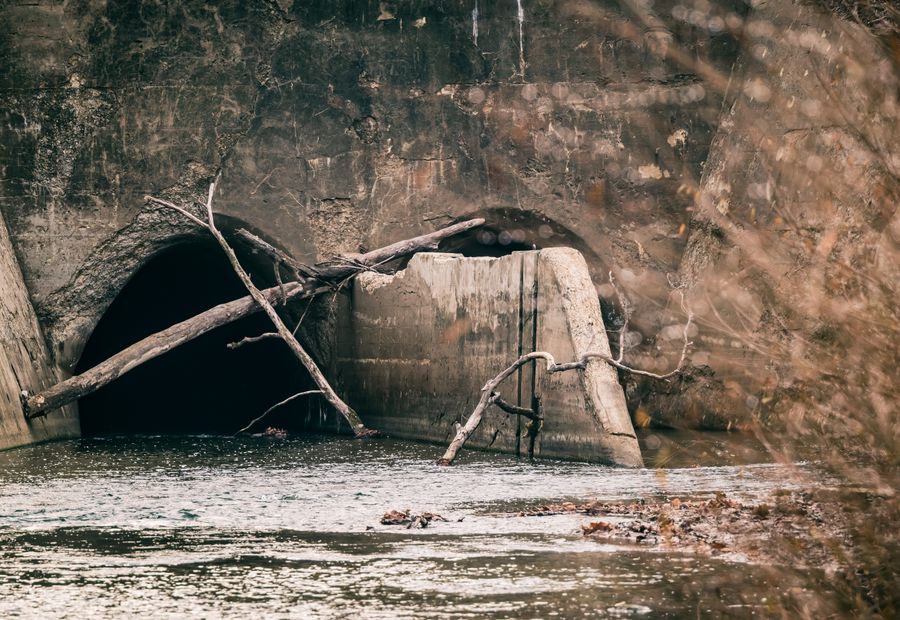
Springfield Culvert Company installs outlet protection and fixes erosion around driveway entrances across Greene County, Missouri. We also install and replace culverts, clean and repair blocked pipe, build farm and field entrances, grade approaches, and set lane crossings. We work rural properties around Springfield, Willard, Fair Grove, Bolivar, and Rogersville.
Protection goes in as angular riprap and rock rundowns sized to the flow, bedded on non-woven geotextile fabric so the rock and the soil never mix. New slopes get seed and an erosion control blanket. Set that against a few buckets of round creek gravel tipped at a pipe end. Round stone rolls, unsupported rock sinks into soft ground, and the hole that was there before is back by the second storm.
Scour Is the Failure Nobody Plans For
Water inside a pipe moves faster than water in an open ditch, because the pipe confines it. All that speed arrives at the outlet and lands on whatever sits there. Bare dirt is not a surface, it is an opening bid. The scour hole deepens, undercuts the end of the pipe, and then the fill above the pipe starts moving into the hole. Every part of that sequence is cheaper to prevent than to repair.
Spreading the Water Out
Rock at an outlet does one simple job: it takes the energy out of the water and hands it to the ditch gently. The rock has to be angular so the pieces key into each other, sized so the flow cannot move it, and set on fabric so it stays where it was placed. Bigger flows get a rundown carried further down the ditch rather than a small pad at the pipe.
Inlets Undercut Too
The inlet side gets ignored because the damage is less visible. Water dropping into an opening pulls at the fill around it, and an inlet with no end treatment loses ground the same way an outlet does. Shaping the ditch above the pipe so water arrives straight, rather than hitting the end at an angle, does most of the work.
Ditch Shaping and Slumped Shoulders
A ditch that has silted flat, filled with brush, or wandered off its line pushes water against banks instead of down the middle. We reshape it above and below the entrance, cut slumped shoulders back to solid ground, and rebuild them in compacted lifts with rock at the toe. Then it gets seeded, because bare ground here does not stay put.
Booking
Erosion work goes in fastest when the ditch is low. Call (417) 612-8230.
Why is there a hole under the end of my culvert?
Water leaves a pipe faster than it moves in an open ditch, and it lands on whatever is under the outlet. Bare soil scours out, the hole deepens, and it works backward under the pipe until the end has nothing supporting it. That is scour, and it is the most common way a perfectly good pipe ends up hanging in the air. Rock at the outlet stops it before it starts, and it is cheap next to a replacement.
What kind of rock goes at a culvert outlet?
Angular rock, sized to the flow, laid on fabric. Angular matters because the pieces lock together, while round river gravel rolls away under moving water. Size matters because rock too small simply leaves with the next storm. The fabric underneath keeps the rock from working down into the soil and the soil from washing up through the rock. Skip the fabric and the rock disappears into the ground within a few years.
The shoulder beside my driveway is sliding into the ditch. Can that be fixed?
Yes, and the sooner the better. A slumping shoulder means the fill beside the entrance is losing support, usually because water is running along the face of it or leaving an unprotected pipe end. We cut it back to solid material, rebuild in compacted lifts, protect the toe with rock, and reshape the ditch so water runs down the middle of it instead of against the bank. Fill dumped on top of a slump slides again.
Do new ditch slopes need seeding?
They do, and it is the last step people skip. Bare soil on a fresh slope moves with the first rain, and everything it carries ends up in the culvert inlet. Seed plus an erosion control blanket holds the surface long enough for roots to take hold. On steeper banks the blanket does most of the work for the first month. It costs very little compared with cleaning the pipe out twice.