Springfield Culvert Company: Driveway Culvert Installation in Springfield, MO
Springfield Culvert Company is an excavating contractor working driveway entrances across Greene County, Missouri. We install driveway culverts, replace pipe that has rusted out or gone flat, repair and clean plugged culverts, build farm and field entrances, grade driveway approaches, set creek and lane crossings, armor outlets against scour, and run commercial and subdivision entrances. Our customers own acreages, gravel-road frontage, hay ground, and small farms in Greene, Christian, Webster, Polk, and Dallas counties.
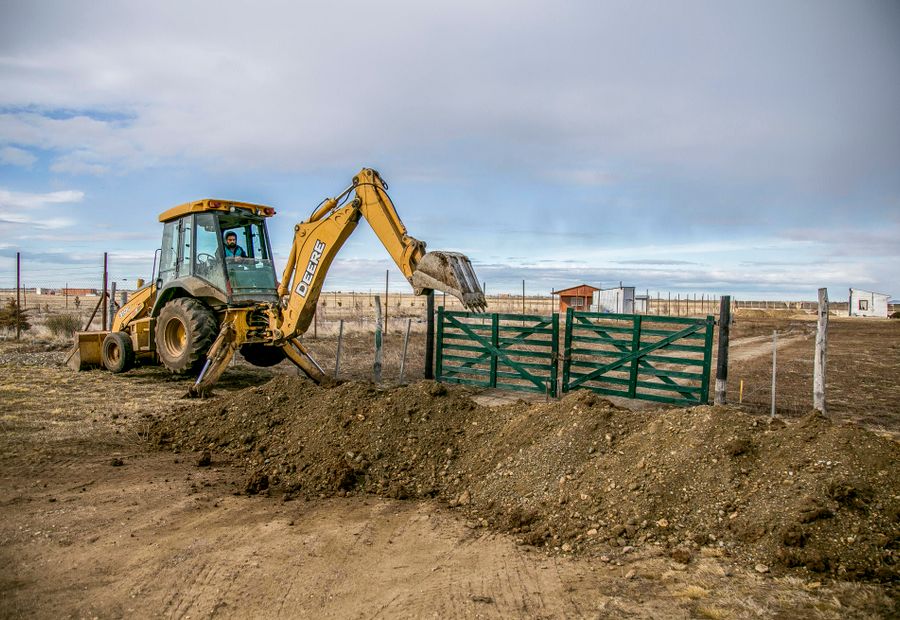
We set Contech HEL-COR galvanized corrugated metal pipe on a shaped granular bed, backfill both sides in lifts, fit a flared end section at each end, and drop angular rock on non-woven geotextile fabric where the water lands. Greene County does not allow plastic pipe in its right-of-way, so an entrance culvert here is steel or concrete. Every pipe gets sized to the ditch it carries, not to the width of the driveway. Set that against a short pipe dropped in a trench and covered with the dirt that came out of it. Water finds the loose ground beside that pipe first, then it finds the driveway.
Call for a Free Estimate- Licensed and insured in MO
- Pipe sized to the ditch, not the driveway
- Granular bedding and even backfill
- Flared ends and rock at the outlet
- Greene, Christian, Webster, Polk, and Dallas counties
Driveway Culvert Installation
A driveway culvert carries the roadside ditch under your entrance. The ditch keeps running. Your entrance rides over it. Everything that decides whether the entrance lasts happens before the first load of rock goes down: the diameter, the length, the bed under the pipe, and the fall from one end to the other.
We measure the ditch, look at the ground draining to it, and apply for the county permit before we quote a number. More on driveway culvert installation.
Culvert Replacement
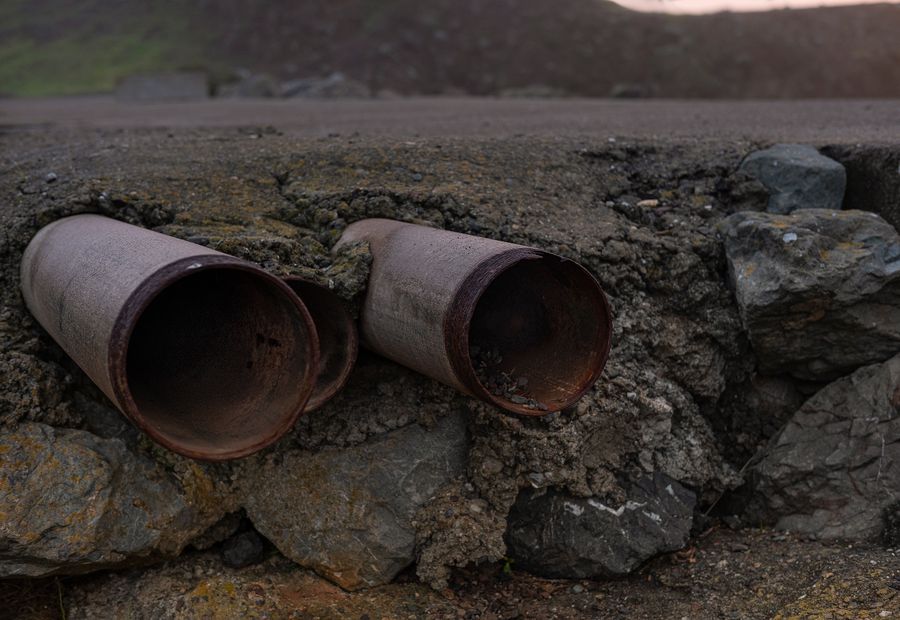
Old galvanized pipe rusts from the bottom up. The bottom of the pipe sits in water and silt, so that is where the metal goes first. Look in the end and the pipe seems fine. Walk the ditch after a hard rain and the ground over it is sinking.
We pull the old pipe, cut the trench to the ditch flow line, and set the new one at a grade that drains. Most residential entrances go in and reopen the same day. More on culvert replacement.
Culvert Repair
Plenty of culverts do not need replacing. They need digging out. Silt, gravel washed off the shoulder, a root mass, cattails, or a beaver dam will close a sound pipe. That is the cheapest call you can make and it is the first thing we check.
We also rebuild washed out ends, reset end sections that blew off, patch rusted inverts, and fill the voids where soil has run out from beside a pipe. More on culvert repair.
Farm & Field Entrances
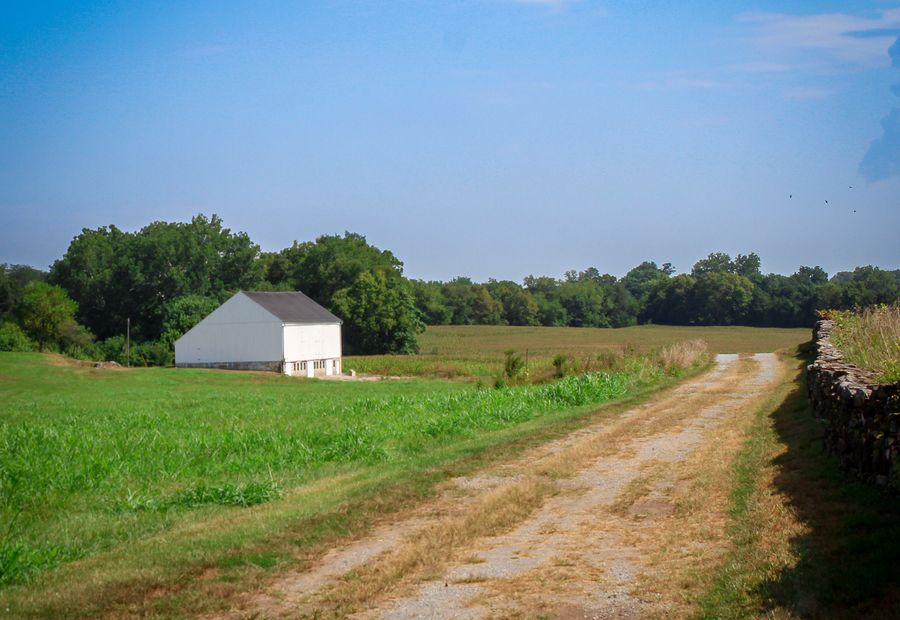
A grain truck needs a wider throat than a pickup does. A wider entrance needs a longer pipe. Loaded axles need more cover over the top of that pipe than a car does. Field entrances fail because somebody built them to car standards.
We build the turning radius the equipment actually needs and we work around your calendar. Nobody digs a field entrance during hay season or harvest. Read the farm entrance page.
Driveway Approach & Grading
The pipe is half the job. The approach is the half you notice every day. The driveway has to climb out of the ditch and meet the road without a hump that scrapes a bumper or a dip that holds a puddle.
Behind the road the drive needs a crown or a cross fall, so rain leaves the surface sideways instead of running the length of it into your culvert. More on driveway approach grading.
Creek & Crossing Culverts
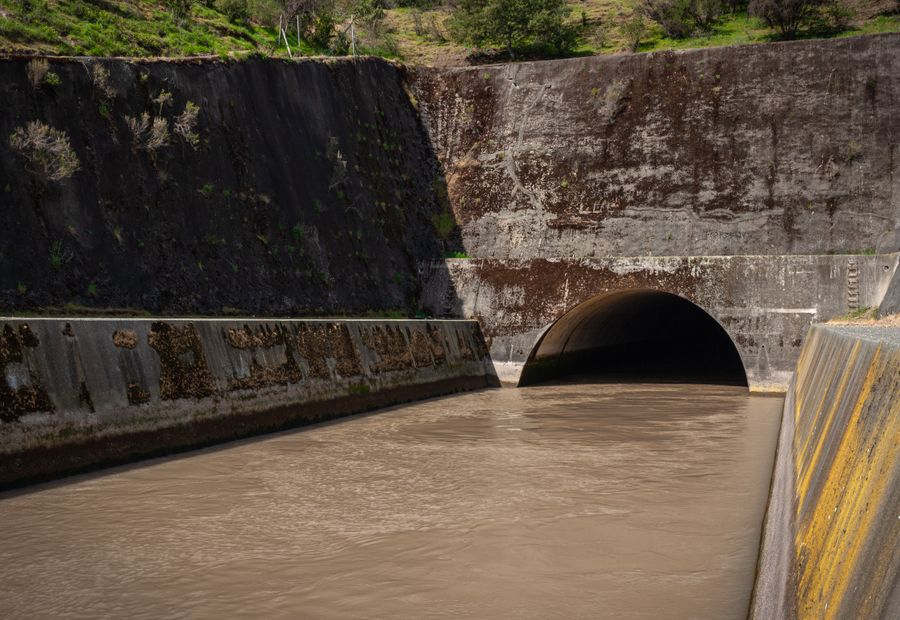
A lane crossing a draw or a live creek is a different animal from an entrance on a road ditch. The water comes from a watershed rather than a shoulder, the banks want protection on both sides, and a box section often beats round pipe where there is no room for cover.
A crossing on a live stream can trigger approvals that a roadside entrance never does. We find out which ones apply to your crossing before we price it. More on creek and crossing work.
Outlet & Erosion Protection
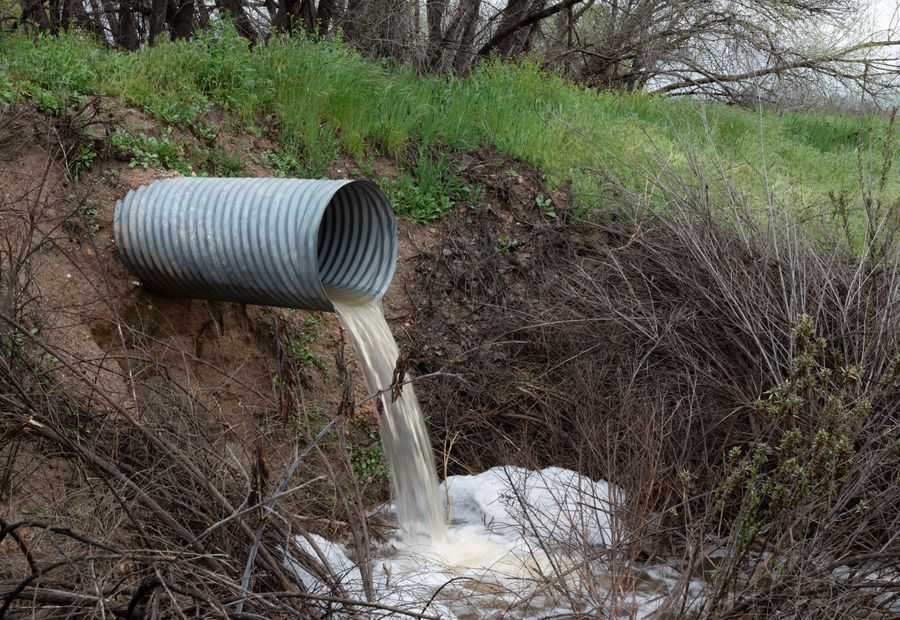
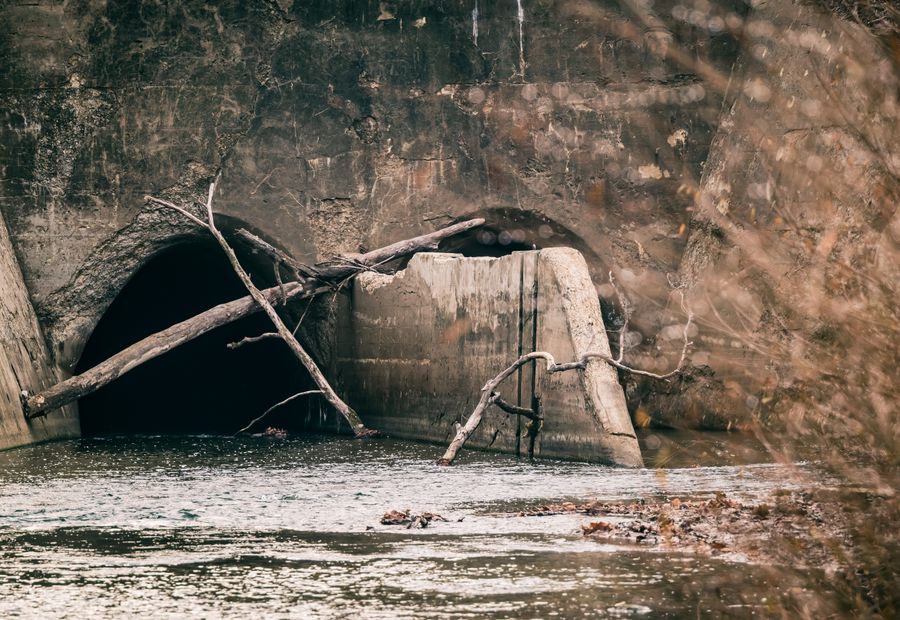
Water leaves a pipe faster than it travels in an open ditch. It lands on whatever sits below the outlet. Bare dirt turns into a hole, the hole works back under the pipe, and then the end of the pipe hangs in the air with nothing under it.
Angular rock sized to the flow, set on fabric, spreads that water out and stops the scour before it starts. It costs a few hundred dollars and it saves the pipe. More on outlet and erosion control.
Commercial Culverts
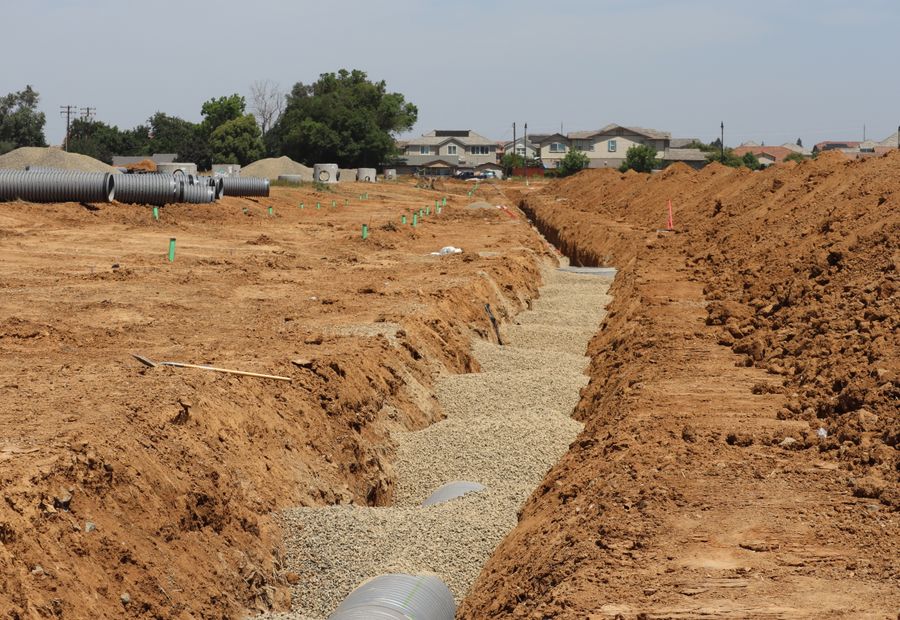
Commercial entrances, private roads, and subdivision crossings run to an engineer's plan and to heavier load numbers. Reinforced concrete pipe and precast box sections do most of that work, and poured headwalls hold the ends where the slope is steep.
We phase the work so an entrance stays usable through business hours and we deal with the road authority on the permit. More on commercial culverts.
Why Greene County Landowners Call Us
- We size the pipe to the ditch. The question is how much water reaches that point in a hard rain, and the answer comes from the acres above it and how steeply they fall. A short driveway below a big watershed takes a bigger pipe than a long driveway below a small one. Start with driveway culvert installation.
- Bedding is the part nobody photographs. The trench bottom gets shaped and a granular bed goes under the pipe, so the pipe bears along its whole length rather than on two high spots. Then backfill goes in on both sides together, in lifts. See culvert replacement.
- Money gets cut at the ends, and the ends decide the pipe. A pipe cut off flush has an unsupported end, and water eats the fill around it until the shoulder slumps. Flared end sections hold that fill back. See outlet and erosion protection.
- We sell you the cheap fix when the cheap fix is the answer. A plugged pipe is a cleaning job, not a replacement. See culvert repair.
- The approach gets built, not just backfilled. Compacted base, the right rock over it, and a fall that carries water off the driveway instead of down it. See driveway approach grading.
- We confirm the rules on your road before we quote. Work in the right-of-way needs a permit from your county or road district, whichever one maintains that road. Greene County also publishes a rule worth knowing: no plastic pipe goes in its right-of-way. We check what applies to your entrance first, then tell you plainly which parts of the job are ours and which are theirs.
Why Cheap Culverts Fail
Four causes, and it is the same four every time. Nobody in this trade writes them down, so here they are.
The Pipe Was Sized to the Price
An undersized pipe does not politely pond water behind it. It sends the water over your driveway. Moving water cuts a channel through gravel in one storm, and the next storm widens the channel. Dig out the wreck afterward and the pipe is usually still intact. The driveway is gone.
Oversized is its own mistake, not a safe bet. A pipe whose bottom sits below the ditch line collects silt, stands full of water, and grows cattails in it. It also demands more cover to carry a truck, which lifts the whole driveway. Right sized beats biggest.
No Bedding, and Backfill on One Side
A pipe laid on a raw trench bottom bears on two or three high spots. A shaped granular bed spreads that load along the barrel. Then the backfill matters just as much. Fill and compact both sides together, in lifts. A flexible pipe packed hard on one side and left loose on the other deforms sideways before a wheel ever touches it.
Not Enough Cover for What Drives Over It
Cover is the distance from the top of the pipe to the surface you drive on. A residential entrance needs roughly a foot of compacted material over it. A farm entrance taking grain trucks or a concrete truck wants more. Come up short on cover and the barrel takes the wheel load itself, which is what flattens a pipe.
Open Ends and Nothing at the Outlet
The ends are where the money gets cut and where the culvert fails. A flared end section bolts on, widens the opening, guides the water through, and holds the fill off the pipe. A poured headwall with wingwalls does more on a deep ditch or a steep approach. A mitered end cut on the slope is the cheap third option and it is the first thing to erode. At the outlet, rock on fabric is the difference between a working pipe and a hanging one.
Grade and Alignment
The pipe sits on the ditch flow line and runs the direction the ditch already runs, with a slight steady fall from inlet to outlet. Lay it flatter than the ditch and it silts. Lay it crooked to the ditch and water strikes the end at an angle, scours the shoulder, and starts working around the pipe instead of through it. Set the outlet above the ditch bottom and the barrel holds water permanently.
Three Materials, and One Local Rule
Galvanized corrugated metal is the pipe most existing entrances already have. It is cheap, stiff, and it rusts at the invert first, so a pipe with a hole in its bottom looks sound from the end. Reinforced concrete is heavy and rigid, carries load on its own, outlasts the other two, and needs a machine to set plus joints pulled up tight. HDPE dual wall is corrugated outside and smooth inside, it does not corrode, and one machine and one man can handle it.
Here is the rule that decides which one you get. Greene County publishes a ban on plastic pipe in its right-of-way, so a culvert under your entrance off a county road is steel or concrete. HDPE stays a good answer on the private part of your property, meaning a lane crossing a draw or a wet spot well back from the road. We tell you which side of that line your pipe sits on before we order anything.
Frost Works on a Culvert Twice
Ice inside the barrel blocks it, so a February thaw sends meltwater over the driveway instead of through the pipe. That is the classic spring washout and the pipe was never damaged. Second, the ground around a shallow pipe freezes and lifts the driveway while the pipe stays where it is. That is the bump that shows up right over the culvert every March.
How a Culvert Job Runs
Measure the Ditch
We stand in the ditch, read its depth and its fall, and look at the ground draining to that point. Acres above you, how steep they drop, and whether they are pasture, timber, or roof and pavement.
Sort the Permit
Your county or road district issues it, depending on who maintains the road. On a Greene County road the Right-of-Way Inspector comes out, checks placement, and sets the pipe size himself. We walk you through the application or pull it with you.
Price It in Writing
Diameter, length, material, end treatment, rock at the outlet, and how much approach gets rebuilt. You see every line. The permit fee is separate from our price and we tell you what it runs.
Dig and Bed
The old pipe comes out, the trench bottom gets shaped to the flow line, and granular bedding goes under the barrel. Rock ledge in the trench is normal here and it changes the digging, not the method.
Backfill, Ends, and Approach
Lifts on both sides, compacted evenly. End sections go on, rock goes down at the outlet on fabric, and the approach gets base and surface rock with a fall built into it.
What a Driveway Culvert Costs Around Springfield
A culvert prices by the pipe and by everything around the pipe. Two entrances on the same road can be a thousand dollars apart because one needs twice the length and a rebuilt approach. Depth to limestone is the local wildcard, and it changes from one entrance to the next.
| Work | Typical Range | Notes |
|---|---|---|
| New residential driveway culvert, installed | $1,800 - $4,500 | Pipe, bedding, backfill, flared ends, and the approach tied back in |
| Replacing an existing culvert | $2,200 - $5,500 | Adds removal, disposal, and rebuilding the entrance that comes out with it |
| Cleaning a plugged pipe | $250 - $800 | Silt, gravel, roots, or a dam at the inlet. Cheapest call on this page |
| Rebuilding a washed out end | $600 - $2,000 | Fill, compaction, a new end section, and rock where the water lands |
| Flared end sections, pair | $300 - $900 | Steel, sized to the pipe. The standard residential end treatment |
| Poured headwall and wingwalls | $1,500 - $5,000 | Deep ditch, steep approach, long pipe, or a hard driveway edge |
| Riprap at the outlet on fabric | $300 - $1,200 | Angular rock sized to the flow. Saves the pipe end |
| Farm or field entrance | $3,500 - $9,000 | Longer pipe, wider throat, heavier cover, equipment turning radius |
What moves the price:
- Pipe diameter, because the ditch sets it and a bigger ditch costs more
- How long the pipe has to be, which the entrance width sets
- Steel or concrete pipe, which is the choice on a county entrance
- Flared ends versus poured headwalls
- Whether an old pipe has to come out and go somewhere
- How much of the approach gets rebuilt
- Chert and rock ledge in the trench
- Rock at the outlet, and seeding or blanket on new ditch slopes
Frequently Asked Questions
Can I install a culvert myself?
An owner with a machine can dig a small pipe in, and plenty do. The permit still applies on a public road, and the road authority still sets the diameter and the minimum length. An entrance built without that approval can be ordered back out at your cost. Three things go wrong on owner installs: no bedding under the pipe, not enough cover over it, and bare dirt at the outlet.
How long does a driveway culvert last?
Galvanized metal runs a few decades and gives out at the bottom first, where water and silt sit. Aluminized coatings buy longer in aggressive ground. Concrete pipe outlives both and is the choice under heavy entrances. Material is only half the answer though. The pipes that die young are the ones that were too small or badly bedded, whatever they were made of.
Why does my driveway wash out every spring?
Two reasons, and both are water. Either the pipe is too small or plugged, so runoff crosses the surface of the driveway instead of passing under it, and moving water cuts gravel fast. Or the barrel is iced up during a thaw, which blocks a perfectly sound pipe for a week. A driveway with no cross fall makes both worse, because it runs the water down its own length toward the entrance.
How deep should a driveway culvert be buried?
Think in cover, not depth. Cover is measured from the top of the pipe up to the surface you drive on, and a residential entrance wants roughly a foot of it, compacted. A farm entrance under loaded trucks wants more. The pipe also has to sit on the ditch flow line, so the two get decided together. You cannot bury a pipe deeper to gain cover if that puts the outlet below the ditch.
Will my driveway be shut for days?
A normal residential entrance is a one day job once the permit is in hand. Digging, bedding, setting the pipe, backfilling, ends, and rock all happen between morning and evening. Add a day for a long pipe, a poured headwall, or a full approach rebuild. The permit is usually the longest part of the calendar, not the machine work.
Can I still use my driveway while you work?
Not during the dig. The entrance is open trench for part of a day, so plan to park on the road side or use a second access if you have one. Tell us before we start if somebody has to get out for work or a medical appointment. We can stage the day around it, and on farms we routinely keep one entrance open while another is closed.
Do you dig in rock?
Regularly. The ground here is cherty and rocky, and the depth to limestone varies a lot from one property to the next. Rock slows the trench and it changes the bedding, because a pipe laid straight onto stone bears on points instead of along its length. We haul bed material to the job rather than hoping the trench hands us something we can shape. If a trench turns hard we tell you what that adds before we keep going.
When can you start?
Summer and early fall are the good months. The ditch is low, the trench is dry, and the ground holds a machine. Spring is when everything breaks and the schedule fills fast. Winter is measuring and permit season, so a pipe measured in January is a pipe in the ground the week the ground opens. We never promise a date over a running ditch or saturated ground.
Ozark Ground, and What It Does to a Ditch
Springfield sits on the Springfield Plateau, part of the Ozark Highlands. The rock underneath is cherty Mississippian limestone. The ground above it is cherty and rocky too, and the depth to that limestone changes from one property to the next. Three things follow from that, and a culvert contractor here meets all three every week.
First, the streams fall hard. Ozark valleys are narrow and the gradients are steep, so a large share of what lands on a hillside reaches the bottom as runoff rather than sitting where it fell. Your roadside ditch is the bottom of a small version of that. A ditch that looks like a mowed swale most of the year moves real water when the hillside above it drains. This is why we ask what drains to your entrance instead of how wide your driveway is.
Second, the trench is unpredictable. One entrance digs like a garden and the next one finds rock a spade deep. That changes the day and it changes the bedding, because a pipe set straight onto stone bears on points rather than along the barrel. Bed material comes to the job on the truck.
Third, karst. Sinkholes, caves, springs, and losing streams are ordinary across this plateau, and surface water that goes down here goes underground rather than downstream. We work around known sinkholes and surface drainage features instead of over them. We make no promise at all about filling one or building across one.
Then the permit. Greene County requires one to build a driveway or install a culvert on county right-of-way. The Right-of-Way Inspector at the county highway department comes to the site, checks where the entrance goes, sets the culvert size on the spot, and issues a permit carrying installation instructions. The county inspects and approves the work before final sign-off. The owner is responsible for having the culvert installed to those specifications, and that is our part. Greene County also bans plastic pipe in its right-of-way. If your road belongs to a city, a special road district, or the state, a different office runs it and we find out which before we quote.
Culvert Work Across Southwest Missouri
We work driveway entrances across Greene, Christian, Webster, Polk, and Dallas counties. That covers the acreages north of town toward Fair Grove and Willard, the US 160 side out past Ash Grove, the James River ground around Rogersville, and the longer runs up US 65 to Buffalo and Bolivar or east on I-44 to Marshfield and Seymour. Call us with a ditch in any of them.
Ready to Get Your Entrance Looked At?
Call (417) 612-8230 for a free estimate. Tell us what road you are on, what the pipe is made of if you know, how wide the entrance is, and what the water did the last time it rained hard. We will tell you straight whether you are looking at a cleaning, a new end, or a pipe that is finished. We measure and permit through the winter and dig when the ditch and the ground allow it.