Driveway Approach and Grading in Springfield, MO
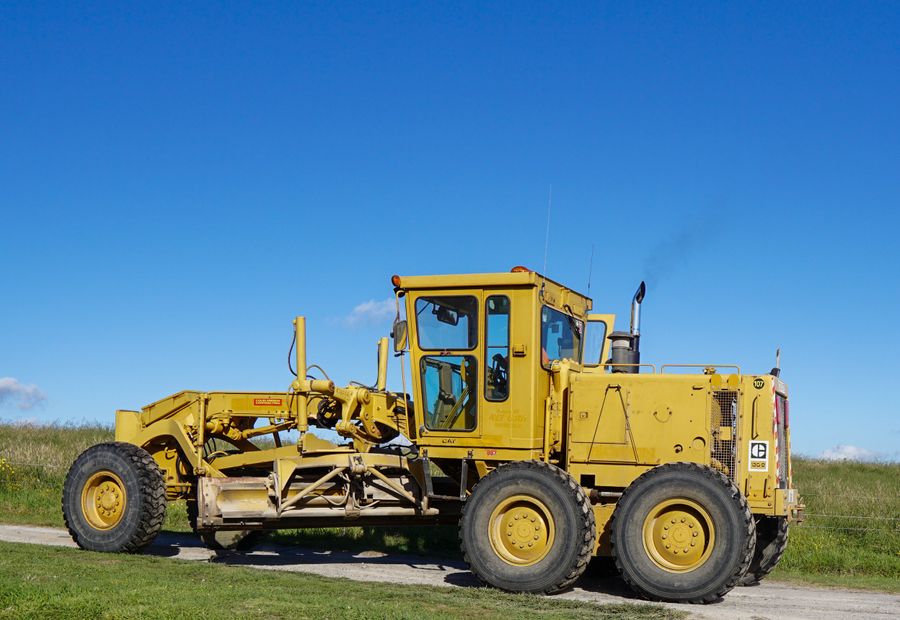
Springfield Culvert Company grades driveway approaches and rebuilds rural entrances across Greene County, Missouri. We also install and replace driveway culverts, clean and repair pipe, build farm and field entrances, set crossings, and armor outlets. We work acreages, farms, and long private drives around Springfield, Willard, Rogersville, Marshfield, and Ash Grove.
Approaches go together in layers. Compacted subgrade first, then a coarse base course, then surface rock shaped to a crown or a cross fall. New ditch slopes get seed and an erosion control blanket so grass holds the ground before the next storm tests it. Set that against a load of rock dumped on soft ground and spread with a blade. That approach looks finished for about two months, and then the ruts come back through it.
The Approach Is Half the Job
The pipe gets the attention and the approach gets driven on every day. Your driveway has to rise out of the ditch and reach the road without a hump that catches a low bumper or a sag that ponds. Those two faults come from the same source: fill placed to reach cover over a culvert without blending the grade out either side of it.
Getting Water Off the Drive
A driveway with no crown carries its own runoff downhill, and the bottom of that hill is usually your culvert inlet. The water arrives with gravel in it, the inlet silts, and the pipe gets blamed. Ozark ground falls steeply here, so a drive on a slope moves real water along its length. Crown, cross fall, and a turnout or two send it off the surface early instead of concentrating it at the entrance.
Grade Tied to the Culvert
Approach elevation and culvert elevation are one decision, not two. The pipe sits on the ditch flow line and needs its cover. The drive has to reach that height and come back down to the road smoothly. Set one without the other and you get either a bump over the pipe or a pipe with not enough over it.
Sight Distance and Placement
Where an entrance goes is partly a safety question, and the road authority has an opinion about it. On a Greene County road the inspector checks placement as part of the permit. If your entrance sits on a curve or below a crest, that conversation happens before we build, not after.
Booking
Grading goes best on ground that is damp rather than wet or bone dry, since compaction needs moisture. Call (417) 612-8230 and describe how the drive behaves in a storm.
Why does my car scrape at the end of the driveway?
The approach has a hump in it, usually right where the drive comes up out of the ditch and meets the pavement. It happens when fill gets piled over a culvert to reach cover depth and nobody blends the grade back out on both sides. The fix is regrading, not more rock. We cut the high point, carry the transition further back from the road, and rebuild the surface so a low car crosses it without touching.
What is crown and why does my driveway need it?
Crown is a slight high line down the middle of the drive so water runs off the sides instead of along the length. Cross fall does the same thing by tipping the whole surface one way. Without either, a gravel driveway becomes its own creek in a storm, and everything it picks up gets delivered to your culvert inlet. Rebuilding a drive with a real crown is the cheapest drainage improvement most rural properties can make.
How much rock does a gravel approach need?
Two layers, and the bottom one is the one that matters. A coarse base course goes down on compacted subgrade and carries the load. A finer surface course goes over it and gives you a driving surface that sheds water. Depth depends on what crosses it and how soft the ground under it is. A single load of rock spread thin over soft ground disappears into it by spring, which is why the base gets compacted first.
Can you tie a concrete or asphalt apron to a gravel drive?
Yes, and the joint is where these go wrong. The apron needs a compacted base under it just like the gravel does, and the gravel side needs to sit slightly high against the edge so water does not pond at the seam and undercut it. We build the transition so both surfaces meet flush and stay that way, and we set the elevations off the culvert and the road rather than eyeballing them.