Creek and Crossing Culverts in Springfield, MO
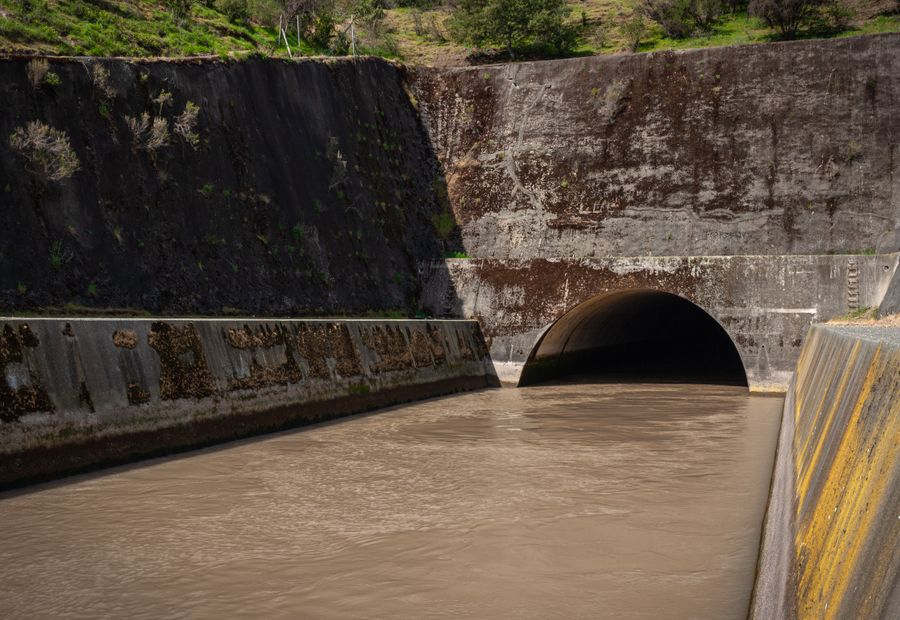
Springfield Culvert Company builds lane and creek crossings on private ground across Greene, Christian, Webster, and Dallas counties in Missouri. We also install driveway culverts, replace failed pipe, repair and clean blockages, build farm entrances, grade approaches, and protect outlets. Our customers own hill ground, timber, pasture, and hunting land around Springfield, Rogersville, Seymour, Ash Grove, and Fair Grove.
Crossings go in as precast concrete box culvert sections where the span is wide and the cover is shallow, and as large diameter pipe where the channel allows depth. On private ground away from county right-of-way, ADS N-12 dual wall HDPE is a good pipe and we use it: smooth bore, corrugated outside, and immune to soil chemistry. That is the distinction to keep straight, because Greene County does not allow plastic pipe in its own right-of-way. Angular riprap keyed into both banks holds the channel where the water enters and leaves.
Sizing for a Stream, Not a Ditch
A ditch takes water off a road and the ground beside it. A creek drains a watershed, and Ozark valleys are narrow with steep gradients, so a stream that is ankle deep on a normal day carries a very different volume when the hills above it drain. The channel itself tells you a lot. Its width, its depth, and the debris line on the banks are all evidence, and we read them before proposing an opening.
Box Sections and Arches
Round pipe needs depth to work and cover to carry traffic. Where a lane cannot rise, a box section or an arch gives you the same waterway spread out sideways under a shallower crossing. They cost more and they set with a machine, and on the right crossing they are the only thing that fits.
Banks, Beds, and Debris
Water leaves a crossing faster than it arrives, so the downstream bank is where the damage starts. Rock sized to the flow protects both sides, and the inlet gets shaped so debris passes rather than stacking. A crossing that catches every branch upstream of it becomes a dam eventually.
Approvals Come First
A crossing on a live stream can involve approvals a driveway entrance never triggers, and that is separate from any county road permit. We identify which offices have a say before we quote, and we do not start a stream crossing on an assumption. Where a crossing sits on your own ground away from a public road, the road permit may not apply at all, but the water still might.
Booking
Low flow is everything on this work, so late summer is the window. (417) 612-8230.
Is a creek crossing different from a driveway culvert?
Very. A roadside ditch takes water off a road and a short slope above it. A creek takes water off a whole watershed, and it can rise hard when that watershed drains. Sizing works from the stream and its channel rather than from a ditch. Approvals are different too, because work in a flowing stream involves offices a driveway entrance never touches. We find out what applies to your crossing before we price anything.
Should I use one big pipe or several smaller ones?
One larger opening usually beats several small ones. Multiple pipes give the stream more surfaces to catch debris on, and a log across two inlets closes both. Where cover is tight and you cannot get a large round pipe deep enough, a box section or an arch spreads the opening sideways instead of downward. Several pipes still make sense on a wide shallow channel, and we will say which shape your crossing wants.
What about a low water crossing instead?
It is a legitimate answer on a lane that does not need to be passable every hour of the year. A hardened ford lets high water run across the surface rather than trying to force it through an opening, so there is nothing to plug and nothing to wash out. The tradeoff: you do not cross it while it is running. Plenty of back lanes and pasture accesses are better served that way than by a pipe that gets overtopped anyway.
Can you build a cattle or equipment crossing?
Yes, and the difference is what it has to carry. A crossing used by loaded equipment needs a rigid pipe or a box section, real cover, and banks that hold up under turning. A stock crossing needs stable footing and bank protection where animals walk in and out, because that is where the channel starts breaking down. Both need the water to pass without the crossing becoming the narrowest point in the stream.