Farm and Field Entrances in Springfield, MO
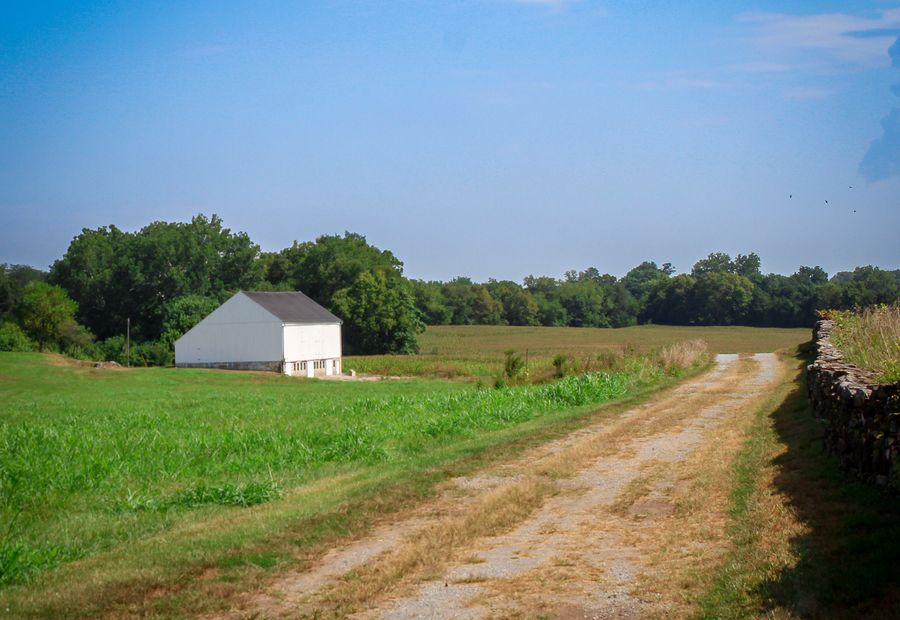
Springfield Culvert Company builds farm and field entrances across Greene, Polk, Dallas, and Webster counties in Missouri. We also install and replace driveway culverts, repair and clean pipe, grade approaches, set creek and lane crossings, and handle commercial entrance work. Our customers run row ground, hay ground, cattle, and small acreages around Springfield, Fair Grove, Bolivar, Buffalo, and Marshfield.
Field entrances go in with reinforced concrete pipe where loaded axles cross daily, or Aluminized Type 2 corrugated metal where the ground and water are aggressive on plain galvanizing. Both sit on shaped granular bedding with backfill compacted in lifts on both sides, and both get more cover than a house driveway ever needs. Greene County bans plastic pipe in its right-of-way, so a field entrance off a county road is steel or concrete. Set that against a residential pipe put in at residential cover, which goes flat the first autumn a loaded truck uses it.
Built for the Equipment, Not the Pickup
A grain truck needs room to swing. A combine head needs more. The turning radius off the road sets the width of the throat, and the width of the throat sets the length of the pipe. That is why a farm entrance takes more pipe than a driveway on the same ditch. Building it short costs less on day one and then the traffic drives across the shoulder to make the turn work.
Gates Set Back Off the Road
A gate hung at the road line means somebody stops on the pavement to open it. Setting the gate back gives a truck room to pull clear of traffic before anything opens, and it gives the entrance a level pad to sit on. That pad wants base and surface rock, not just the material that came out of the ditch.
Tile Outlets and Field Drainage
Tile lines and surface drains often outlet into the same ditch your entrance crosses. We locate them before the machine starts, keep the outlet above the culvert invert, and protect it while backfill goes in. Water leaving your field has to keep leaving it after we are done.
Keeping Access Open
Most farms have more than one way in, and we use that. One entrance closes while another stays open, and we sequence multiple entrances on the same job rather than shutting the whole place down. Tell us which access has to work each day and we plan around it.
Scheduling
Summer and the window after harvest are the good times. The ditch is low and the ground holds a machine. Call (417) 612-8230 with your field and your calendar.
How wide does a field entrance need to be?
Wide enough for the longest thing that turns into it, which is usually a grain truck or a tractor pulling equipment. The number that matters is the turning radius off the road, not the width of the gap. An entrance built to car dimensions makes a driver swing wide across the ditch on both sides, and the shoulder pays for it. Tell us what equipment uses the field and we will lay out the throat to suit it.
How much cover does a farm entrance need?
More than a house driveway. Figure roughly a foot of compacted material over a house driveway pipe. An entrance carrying loaded grain trucks, a manure spreader, or a concrete truck wants more than that, because the pipe carries whatever the cover does not spread out. Build a farm entrance on residential cover and the barrel flattens under the first heavy load. That is also why concrete pipe earns its place on heavy use entrances.
Can you work around planting and harvest?
That is how this work gets scheduled. Nobody digs a field entrance while equipment needs to move through it. Spring and fall belong to you, and we book the work into the gaps: after planting is finished, through the summer, or once harvest is off. Winter is fine for measuring and permitting so the machine can arrive the week the ground opens.
My tile line outlets into that ditch. Does it change the culvert?
It changes where things sit and it is worth flagging before we dig. A tile outlet discharging near the entrance has to keep its fall and stay clear once the new pipe and fill are in, otherwise you trade a driveway problem for a wet field. We locate the outlet, keep it above the culvert invert, and protect it during backfill. Point it out to us on the walkover, because a buried outlet is easy to miss.